%20copy.png)

Selling Your Tallahassee Home This Fall? Here's How Your Roof Affects Resale Value

If you're getting ready to list your Tallahassee home this fall, there's a good chance your roof isn't at the top of your to-do list. Paint touch-ups, decluttering, a little landscaping — those tend to get the attention. But your roof affects resale value more directly than almost anything else on that list, because it isn't just something buyers glance at from the curb. It shows up in the home inspection report, in the lender's appraisal, and sometimes in the financing itself — and any one of those can slow down or shrink an offer you were counting on. This isn't the same conversation as "does a new roof pay off if I stay in my house for years." That's a question about long-term return. This one is narrower and more urgent: what does your roof need to look like right now, before a buyer's inspector, appraiser, and lender ever get involved, so your fall listing goes as smoothly — and profitably — as possible?
Why Your Roof Becomes a Bigger Deal the Moment You List
While you live in your home, a roof with a few years of wear left is just your roof. You've patched what needed patching, and you're not thinking about it daily. The moment you list, though, it stops being a private maintenance decision and becomes something three separate parties will scrutinize:
The buyer's home inspector, who will note its age, material condition, and any visible red flags in a written report the buyer reads carefully.
The lender's appraiser, who isn't just estimating market value — they're confirming the property meets the minimum condition standards required for the buyer's loan type.
The buyer themselves, who is mentally budgeting for a future roof replacement if yours looks like it's getting close, and may use that math to justify a lower offer.
None of this means a roof that isn't brand new will tank your sale — plenty of Tallahassee homes sell every season with roofs that are older but still sound. It does mean roof condition moves from background noise to a front-and-center line item the second your home goes under contract, which is exactly why it deserves a real look before you list, not after an inspection report surprises you.
How Roof Condition Affects Your Home's Appraisal and Resale Value
Here's a distinction a lot of sellers don't realize: a home inspection and a home appraisal are two different things, done by two different people, for two different reasons — and your roof matters to both.
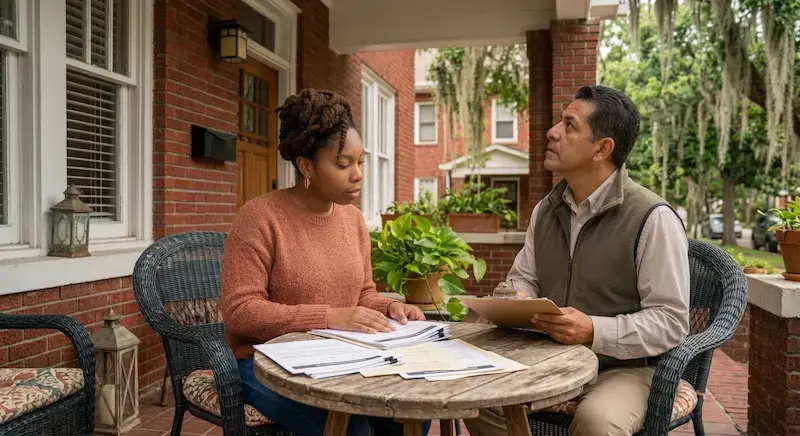
A home inspection is for the buyer — a general, top-to-bottom look at the home's condition, with the roof as one of many systems evaluated and documented.
An appraisal is for the lender. Its job is to confirm the home is worth what the lender is being asked to finance and, for certain loan types, that the property meets minimum condition standards before the loan can close. The Appraisal Institute, the leading professional association for real estate appraisers, notes that a property's condition and improvements are core factors in how an appraiser estimates market value, alongside location and market trends (Appraisal Institute — How Consumers Interact With Appraisers).
What Appraisers Actually Look At On a Roof
An appraiser isn't grading your shingles for curb appeal. They're generally looking at:
Visible condition — missing, curling, or cracked shingles; sagging areas; obvious patch jobs
Signs of active leaks or water intrusion, including interior ceiling staining if observable
General remaining useful life — a rough sense of how many more years the roof can perform
Whether the roof meets the "reasonable future utility" standard government-backed loans require (more below)
A flagged roof doesn't automatically mean your sale falls apart — but it can mean the lender requires repairs before closing, adding time and cost to an otherwise-ready deal.
The Financing Rule Most Sellers Don't Know: FHA and VA Roof Requirements
This is the part of roof-and-resale that catches the most sellers off guard, because it has nothing to do with buyer taste or your asking price — it's baked into the loan itself.
A large share of buyers in the Tallahassee market finance with an FHA or VA loan, both of which come with government-set minimum property standards. If your roof doesn't meet those standards, the lender may not be able to close the loan at all until repairs are made.
FHA Loans: The "Reasonable Future Utility" Standard
FHA-insured loans are underwritten against HUD's Single Family Housing Policy Handbook (Handbook 4000.1), which requires that a roof "prevent moisture from entering the property and provide reasonable future utility, durability, and economy of maintenance" (HUD.gov — Single Family Housing Policy Handbook 4000.1). In practice, this is commonly applied as a roof needing at least a couple of years of remaining serviceable life at the time of appraisal — a roof visibly at the end of its lifespan, or actively leaking, is likely to get flagged, and the seller may be asked to complete repairs (or a full replacement) before the loan can close.
VA Loans: No Fixed Age, But No Free Pass Either
VA loans work a little differently. There's no hard age cutoff in the VA's minimum property requirements — instead, the roof simply has to keep moisture out and offer that same "reasonable future utility, durability, and economy of maintenance" standard, assessed case-by-case by the VA appraiser (VA.gov — Home Loan Eligibility Requirements). A roof with obvious defects, active leaks, or significant deferred maintenance can still trigger a "subject to repair" appraisal, even without a specific age number attached to it.
The practical takeaway: a roof you've been wondering whether it'll "make it a few more years" is exactly the kind that can stall an FHA or VA buyer's financing — and depending on your price point, that could be a meaningful share of your potential buyers.
How a Tired Roof Becomes Negotiation Leverage — Against You
Even when a roof doesn't outright block financing, it can quietly cost sellers money at the negotiating table. A worn roof noted in an inspection report gives a buyer's agent an opening for common asks:
A price reduction, calculated (sometimes generously) against the estimated cost of a future roof replacement
A credit at closing to cover repairs, which reduces your net proceeds the same way a price cut would
A repair request, requiring the work done on your timeline, under deal pressure, before closing can proceed
A renegotiated timeline, if scheduling a roofer's inspection or estimate adds days to a tight closing window
None of these are guaranteed, and buyers don't push on every issue an inspection turns up. But a roof clearly near the end of its life is one of the easiest, most concrete numbers for a buyer's agent to point to — it has a real, quotable replacement cost attached. Sellers who already know exactly where their roof stands, with documentation to back it up, tend to have far stronger footing in that conversation than sellers hearing about a problem for the first time from a buyer's inspector.
Full Replacement vs. a Lighter Fix: What Actually Makes Sense Before You List
This is the question we hear most from Tallahassee sellers once they understand how much weight their roof carries in a sale: do I need a whole new roof, or is there a lighter option?
The honest answer: it depends on your roof's actual condition and age, not a blanket rule — and it's worth knowing a full replacement doesn't return dollar-for-dollar at resale. The National Association of Realtors' 2025 Remodeling Impact Report found new roofing earns the highest possible "Joy Score" of any project measured — homeowners who replace a roof are consistently glad they did — but that asphalt shingle and metal roof replacements both bring a negative cost recovery at resale, meaning sellers typically don't get back 100% of what they spent in added sale price alone (NAR — 2025 Remodeling Impact Report). That doesn't make replacement a bad move — it means its value before a sale isn't only about dollar-for-dollar recovery. It's also about avoiding financing delays, inspection-driven price cuts, and a buyer pool that quietly shrinks once your roof starts scaring off FHA and VA offers.
When a Full Replacement Pays Off
A full replacement is generally the right call before listing when:
Your roof is at or near the end of its expected lifespan for its material
You already know it wouldn't pass FHA/VA minimum property requirements
There's active leaking, significant granule loss, or multiple patches on an aging roof
You want to market the home with a new-roof selling point buyers will notice
When Roof Rejuvenation or Targeted Repairs Make More Sense
A full tear-off isn't always the right move, especially if your roof has real life left. For roofs that are aging but not failing, roof rejuvenation (a coating and restoration treatment that can add roughly five years of usable life without a full replacement) or targeted repairs may be the more cost-effective path, particularly if:
Your roof is mid-life, with no active leaks and no widespread material failure
An inspection would likely turn up only minor, addressable issues
You want to avoid inspection surprises without spending on replacement you may not fully recoup
Your timeline is short, and a lighter fix can be completed faster than a full re-roof
The only way to know which category your home falls into is a real, professional assessment — not a guess based on age alone. Two roofs of the same age can be in very different shape depending on material, maintenance history, and how they've weathered North Florida's sun and storms.

The KFR Difference
KFR Roofing Solutions is a proud Black-owned, family-owned business built right here in the Tallahassee community, and pre-listing roof decisions are exactly the kind of moment our approach is built for. We're not going to tell every seller they need a full replacement, because that isn't always true — our job is an honest, plain-language read on where your roof actually stands, so you can decide whether a full replacement, a roof rejuvenation, or a handful of targeted repairs is the right move for your home and your timeline.
That's the same consumer-first, education-first philosophy behind everything we do: we'd rather earn your trust with a straight answer than push a bigger job than your roof needs. And because a roof project can be an unplanned expense to work into a home sale, we offer zero-down financing options and a price match program, so cost isn't the reason a real issue gets left for the buyer to find first.
Practical Tips for Sellers This Fall
Get a pre-listing roof inspection. Knowing your roof's condition ahead of time lets you address issues on your own terms, not a buyer's.
Keep documentation. Past repair records, inspection reports, and photos give buyers (and their lenders) confidence and can head off unnecessary negotiation.
Ask about your workmanship warranty on any pre-listing repair or replacement, so you know exactly what's covered.
Think about your likely buyer pool. If your price point typically draws FHA/VA buyers, roof condition matters even more.
Don't assume "older" means "unsellable." A well-maintained, mid-life roof with a clean history can be a non-issue.
Get repair or replacement estimates early so you have real numbers instead of guesses if a buyer wants to negotiate.
Time the work with your listing date. Rejuvenation and targeted repairs can often be scheduled faster than a full replacement.
Photograph your roof from the ground before listing photos go up, as a record of its condition at time of sale.
Frequently Asked Questions
1. Does my roof need to be brand new to sell my house?
No. Most homes sell with roofs that aren't brand new. What matters more is that it's in sound, leak-free condition and can reasonably be expected to pass a buyer's inspection and lender's minimum property standards.
2. What's the difference between a home inspection and an appraisal when it comes to my roof?
An inspection is a general condition report for the buyer. An appraisal is for the lender, confirming value and, for certain loan types, that minimum property standards are met. Your roof can come up in both.
3. Will an old roof automatically block an FHA or VA buyer's financing?
Not automatically, but it can. Both loan types require "reasonable future utility, durability, and economy of maintenance." A roof that's actively leaking or clearly near end-of-life can trigger a required repair before closing.
4. Should I replace my roof before listing, even if it's not required?
Not necessarily. A roof with real remaining life may be better served by rejuvenation or targeted repairs, while one near the end of its lifespan is more likely to need full replacement to avoid financing and negotiation issues.
5. Will a new roof add its full cost back to my sale price?
Generally, no — it typically doesn't return its full cost dollar-for-dollar at resale. Its value often comes as much from avoiding inspection and financing problems as from a direct price bump.
6. What is roof rejuvenation, and is it a real alternative to replacement?
A coating and restoration treatment that can extend a roof's usable life — roughly five more years — without a full tear-off. It's reasonable for roofs that are aging but not failing, not a substitute for replacement on a roof past its useful life.
7. How far in advance of listing should I have my roof looked at?
As early as possible. A pre-listing inspection gives you time to weigh replacement versus repair versus rejuvenation and get real estimates, before a buyer's inspector puts timeline pressure on the decision.
8. Can a bad roof lower my appraised value even if the buyer doesn't ask for repairs?
Yes, potentially. Appraisers factor a property's condition, including the roof, into their overall value estimate — separate from any specific repair request a buyer might make.
Ready to Get Your Roof Sale-Ready?
Selling your Tallahassee home this fall doesn't have to mean guessing about how your roof affects resale value. KFR Roofing Solutions offers free consultations to help you understand exactly where your roof stands — and whether a full replacement, a roof rejuvenation, or a few targeted repairs makes the most sense for your home and your timeline. No pressure, no upsell, just an honest answer from a team that's part of this community. Call us at 850-576-1032 to schedule your free consultation or request a free quote today.
Disclaimer: This article is provided for general informational purposes only and does not constitute real estate, financial, appraisal, or legal advice. Loan program requirements, appraisal standards, and market conditions can vary and change over time. Always consult a licensed real estate professional, mortgage lender, and/or licensed appraiser regarding your specific property and transaction, and speak with a qualified, licensed roofing contractor for an assessment of your home's roof.