%20copy.png)

Back-to-School, Back-to-Basics: A Tallahassee Homeowner's August Roof Checklist

There's something about August that makes everyone in the house sit up a little straighter. Backpacks are by the door, lunch menus are back on the fridge, and the whole family is easing back into a routine after a loose, sun-soaked summer. It's a natural reset moment — and it turns out it's a pretty good time to reset a few things about your house, too, starting with the one system that works harder than almost anything else you own: your roof.
You don't need a ladder, a checklist app, or a Saturday you don't have. This August roof checklist is built to take about the same amount of time as packing a lunch — a walk around the yard, a peek in the attic, a look at the gutters — so you can catch small issues before they turn into September surprises. Think of it as "back to basics" for your home, right alongside the backpacks and school supplies.
This isn't a hurricane-prep list (we've got those covered elsewhere) — it's just good, simple homeowner housekeeping. Grab a cup of coffee and let's walk through it together.
Why August Is the Perfect Time for a Roof Reset
Every family has a rhythm, and August tends to snap everyone back into one. School supply lists get checked off, alarm clocks get reset, and calendars fill back up. Your home has a rhythm too — it's just easier to ignore, because a roof doesn't send home a syllabus.
Tying a simple roof and home checkup to the back-to-school reset gives it a built-in reminder: when the backpacks come out, the checklist comes out. By the time North Florida's next stretch of heavy rain or storm activity rolls through, you'll already know your roof, gutters, and attic are in good shape instead of finding out the hard way.

Here at KFR Roofing Solutions, we talk to a lot of Tallahassee families who only think about their roof when there's already a stain on the ceiling. As a Black, family-owned business built right here in this community, we'd rather see our neighbors get ahead of small problems — that's the whole idea behind an August roof checklist: catch it early, fix it small, and keep your family's routine (and your roof) running smoothly.
From the Ground: Your 10-Minute Visual Roof Check
You don't have to get on the roof to learn a lot about it. A pair of binoculars, a walk around the perimeter of your house, and a few minutes is all it takes.

What to look for from the ground:
Missing, cracked, or curling shingles — especially anywhere the roof plane changes direction
Shiny or bald spots where granules have worn off asphalt shingles (a sign of aging or sun/heat wear, very common after a Tallahassee summer)
Dark streaks or stains, which can point to algae growth or trapped moisture
Sagging areas along the roofline or near valleys — a straight roofline should stay straight
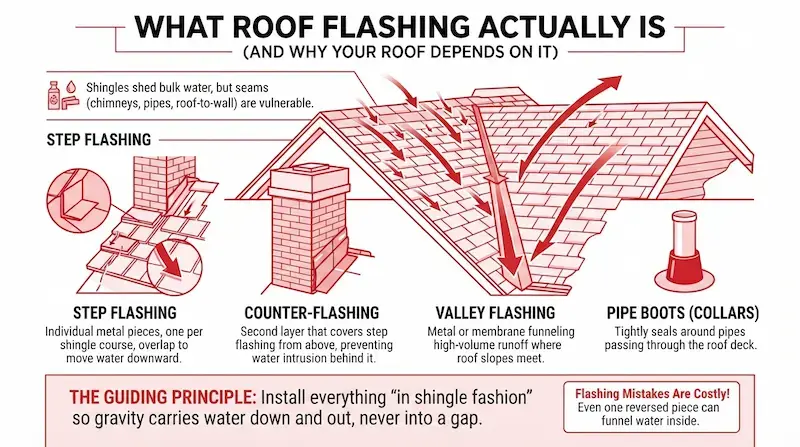
Loose or lifted flashing around chimneys, vent pipes, and skylights
Debris buildup — leaves, pine straw, or branches sitting in valleys or against the roofline
Overhanging tree limbs that scrape the roof surface or drop heavy debris in wind
Granules collecting in gutters or at downspout exits, another aging indicator
Walk the full perimeter of the house if you can, and check from a couple of different angles — some issues are only visible from certain sides of the roof, especially with our afternoon sun angle this time of year.
A quick note on safety: this checklist is designed to be done entirely with your feet on the ground. If anything you see makes you want a closer look, that's exactly the moment to call a professional rather than grab a ladder — more on that below.
Gutters & Drainage: Don't Let Late-Summer Storms Catch You Off Guard
North Florida's late-summer storm pattern doesn't slow down just because school's back in session, and gutters are your roof's drainage system — when they're clogged, water backs up under shingles and along your fascia instead of moving away from your house.

Gutter and drainage checklist:
Clear leaves, pine straw, seed pods, and shingle granules out of gutters and valleys
Check that downspouts drain freely and direct water at least a few feet away from your foundation
Look for gutters that are pulling away from the fascia, sagging, or holding standing water after a dry day (a sign of a low spot or blockage)
Inspect gutter seams and end caps for rust streaks or drip marks
Confirm splash blocks or extensions are still in place and pointed away from the house
Note any spots where water pools near the foundation or driveway after rain
If you have mature oaks or pines near your roofline (common all over Tallahassee), plan on checking gutters more than once during the late summer and fall — our tree cover is beautiful, but it's also a steady source of debris.
In the Attic: What Tallahassee's Heat and Humidity Leave Behind
The attic is where a lot of roof problems show up first, long before they're visible from the ground or even from the shingles themselves. After a hot, humid North Florida summer, it's worth a quick look with a flashlight.
What to check in the attic:
Water stains or dark streaks on the underside of the roof deck or rafters
Damp or discolored insulation, especially near vents, chimneys, or the roof edges
Any daylight coming through the roof deck — a sign of a gap or hole
Musty odors, which often mean trapped moisture before you can see visible damage
Compressed, sagging, or missing insulation
Signs of pests (droppings, chewed wood, nesting material) that can also indicate an opening in your roof or soffits
Moisture control matters here more than most homeowners realize. According to UF/IFAS Extension, mold needs moisture to grow, and most household mold thrives once relative humidity climbs above 60% — exactly the kind of environment a poorly ventilated Florida attic can create during our hot, humid months. Good airflow and prompt attention to any water intrusion go a long way toward keeping your attic (and your indoor air) healthy.
The AC/Roof Heat Connection: Keeping Cool Without Overworking Your System
Your roof and your air conditioner are more connected than most people think. A hot, poorly ventilated attic doesn't just stress your shingles — it pushes heat down into your living space, which means your AC has to work harder to keep up, especially during a Tallahassee August.
A few things worth checking:
Feel for unusually warm spots on ceilings directly below the attic, particularly in the afternoon
Check that attic vents (soffit, ridge, or gable) aren't blocked by insulation, debris, or storage boxes
Notice if your AC seems to run longer or more often than it did earlier in the summer
Make sure attic access panels and doors seal properly — gaps let conditioned air leak up into the attic
Proper attic insulation and ventilation isn't just a comfort issue — it's a real cost issue too. The U.S. Department of Energy's ENERGY STAR program notes that sealing and properly insulating your attic can save homeowners an average of 15% on heating and cooling costs. If your energy bills have been creeping up along with the temperature, your attic and roof are a good place to start looking.
When to Call a Professional
A ground-level walkthrough is a great habit — but it has limits by design, and that's on purpose. Roof work is genuinely dangerous even for an experienced homeowner, and some issues simply aren't visible (or safe to evaluate) from a ladder in the backyard.
Call a licensed roofing professional if you notice:
Any of the visible damage from your ground-level check (missing shingles, sagging, exposed flashing, dark streaks)
Water stains, moisture, or musty smells in the attic
Rising energy bills without an obvious explanation
A roof that's getting close to the age when a full inspection just makes sense, even if nothing looks obviously wrong
Anything you're unsure about — when in doubt, get a second set of trained eyes on it
This lines up with guidance from the National Roofing Contractors Association, which recommends homeowners inspect their roof at least twice a year — in spring and fall — and after any severe storm, but leave repairs and closer inspection to a qualified roofing contractor rather than attempting them personally. A trained professional has the training, harness, and experience to safely get up close and tell you exactly what's going on — and what, if anything, actually needs to be done about it.
The KFR Difference
We built KFR Roofing Solutions on a simple idea: homeowners deserve straight answers, not sales pressure. As a Black, family-owned business rooted right here in Tallahassee and North Florida, we know a lot of the families we work with by name — and we treat every roof like it belongs to someone we know, because more often than not, it does.

That's why our approach to a checklist like this one isn't "call us and we'll find something wrong." It's the opposite — we want you to feel confident doing your own ground-level walkthrough, and we're here for the parts that genuinely need a trained eye or a licensed hand. When you do want a professional look, our team will walk your roof, explain what we find in plain language, and give you honest options — no scare tactics, no pressure, just information you can actually use.
We also make it easier to stay ahead of maintenance year-round through our Roof Shield Club membership program, which builds regular inspections and priority scheduling right into your routine — so you're never starting from scratch each season.
Practical Tips to Make This a Habit
A checklist only helps if it actually gets used. A few small habits make that easier:
Pair it with something you already do. Back-to-school week, the first cool snap, or your smoke detector battery check — attach the roof walkthrough to a date you'll already remember.
Keep a simple log. A note on your phone with the date and what you saw is enough to spot patterns (a stain that's growing, a gutter that clogs faster every year).
Take photos. They're the easiest way to compare "then" and "now" without relying on memory, and they're genuinely useful if you ever need to describe an issue to a contractor.
Do it twice a year, minimum. Spring and fall are the classic windows, but an August check (right alongside your fall gutter cleaning) is a great addition ahead of North Florida's active storm months.
Don't skip the "boring" items. Debris in a gutter or a slightly musty attic smell rarely feels urgent — but they're exactly the small things that are cheap to fix now and expensive to fix later.
Frequently Asked Questions
How often should I inspect my roof?
Most roofing authorities recommend a homeowner walkthrough at least twice a year — spring and fall — plus a check after any major storm. An August check is a great addition to that rhythm, especially in a region like ours where storm season runs well into fall.
Can I do this whole checklist without getting on the roof?
Yes, and that's exactly how it's designed. Everything in the "From the Ground," "Gutters," and "AC/Attic" sections can be done from the ground, a ladder against the gutter line (not the roof), or inside your attic. Anything that requires walking on the roof itself should be left to a licensed professional.
How long does a roof typically last in Tallahassee's climate?
It varies a lot by material, installation quality, ventilation, and maintenance history. Florida's combination of intense UV exposure, heat, humidity, and storm activity tends to age roofs faster than milder climates, which is exactly why regular inspections matter here more than in a lot of other parts of the country. A professional inspection is the most reliable way to know where your specific roof stands.
What's the difference between a roof repair and needing a full inspection?
A repair addresses a specific, known issue — a leak, a section of missing shingles, damaged flashing. An inspection is a broader health check of the whole roof system, often uncovering issues you didn't know were there. If you're not sure which one you need, that's a good reason to start with an inspection.
I found a small stain on my ceiling — is that an emergency?
Not usually an emergency in the "call right now" sense, but it shouldn't wait, either. A ceiling stain almost always means water has already found a way in, and the earlier it's evaluated, the smaller (and less expensive) the fix tends to be.
Do gutters really affect my roof, or just my landscaping?
Both, but the roof impact is bigger than most people expect. Clogged gutters cause water to back up under the roof edge and shingles, which can lead to rot, leaks, and damage to your fascia and soffits — not just an overflow problem in your flower beds.
Will better attic ventilation actually lower my energy bill?
It can meaningfully help. A hot, poorly ventilated attic pushes heat into your living space and makes your AC work harder, so improving attic airflow and insulation is one of the more cost-effective home efficiency upgrades a homeowner can make.
What if I don't see anything wrong — do I still need a professional inspection?
It's still worth it periodically, especially as your roof ages. Some issues (worn underlayment, early flashing failure, ventilation problems) simply aren't visible from the ground or the attic floor. A professional inspection is about catching what a homeowner walkthrough can't.
Ready for a Second Set of Eyes?
Consider this August roof checklist your homework — the kind that actually pays off. If anything on your walkthrough gave you pause, or it's just been a while since your roof had a proper look, KFR Roofing Solutions is happy to help. As your Tallahassee neighbors, we offer free consultations and free quotes, with no pressure and no surprise sales pitch — just honest information about your roof.
Give us a call at 850-576-1032 to schedule your free inspection, or reach out through our website to get started. Here's to a smooth back-to-school season — for the kids, and for the roof over their heads.
Disclaimer: This article is for general informational and educational purposes only and does not constitute professional roofing, engineering, or safety advice. Any roof inspection performed by a homeowner should be limited to ground-level, gutter-line, or attic-interior observation — never walk on or climb onto a roof surface, which should be left to a licensed, insured roofing professional. Always consult a qualified roofing contractor before making repair, maintenance, or safety decisions about your home.